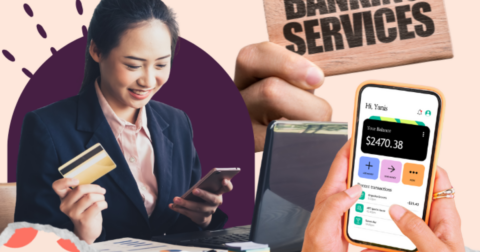




When was the last time you actually needed to visit a bank branch? For many customers, the answer may be months or even years ago. Salary payments, transfers, card management, account statements and everyday payments can now be handled from a smartphone.
This raises an important question: When does it make sense to switch from a traditional bank account to a digital bank account?
There is no universal answer. A digital account can be highly convenient for someone who rarely needs cash or personal branch support, while another customer may prefer the services offered by a traditional bank. The right decision depends on how you use your account, what you pay for banking services and which features matter most to you.
Before making a switch, it is worth looking beyond the attractive interface of a Banking-App and examining the complete banking relationship.
Why Are People Switching to Digital Banking?
Convenience is one of the biggest reasons.
With a digital bank account, many routine tasks can be completed without visiting a branch. Customers can usually check their balance, transfer money, manage cards and review transactions whenever they need to.
Mobile payments are also becoming increasingly common. Smartphones are no longer simply communication devices; they are increasingly being used as payment and financial-management tools.
For customers who prefer managing their finances independently, a digital account can reduce the amount of time spent dealing with routine banking administration.
However, convenience is only one factor.
How Do You Know If Your Current Account Is Still Suitable?
Before switching, look at how you currently use your Girokonto.
Ask yourself:
- How often do I visit a branch?
- How often do I withdraw cash?
- Do I regularly speak with bank employees?
- Am I satisfied with my current Banking-App?
- Am I paying monthly account fees?
- Do I receive enough features for what I pay?
- Do I need personal advice?
- Do I frequently make international payments?
- Do I use instant transfers?
- Do I want better card controls?
Your answers can reveal whether switching would actually improve your financial life.
If you already have a low-cost account with a good app and excellent customer service, moving to another provider may provide little practical benefit.
What Could You Gain From a Digital Account?
A digital-first bank may offer a more streamlined experience for everyday banking.
Depending on the provider, you might receive:
- Fast digital account opening
- App-based account management
- Instant transaction notifications
- Mobile payment options
- Digital card management
- Easy transfers
- Spending insights
- Automated budgeting features
- Paperless statements
Some providers also offer particularly simple interfaces designed for customers who primarily use smartphones.
For someone who checks their account several times a week, a well-designed application can make everyday financial administration considerably easier.
Could You Save Money?
Potentially, but you need to examine the complete pricing structure.
Some digital bank accounts have no monthly maintenance fee or offer free banking when certain conditions are met.
However, other services may still carry charges.
Check the costs associated with:
- Cash withdrawals
- Additional cards
- Foreign currency transactions
- International transfers
- Instant payments
- Overdrafts
- Replacement cards
- Other optional services
A bank account advertised as “free” may have conditions attached.
For example, free account management might require a minimum monthly income or regular incoming payments.
Always check the actual conditions before switching.
What About Cash Withdrawals?
Cash remains relevant for many consumers.
If you frequently use cash, examine the ATM network available with the new account.
A digital bank may not operate its own branches or ATMs. Instead, customers may have access to partner networks or specific withdrawal arrangements.
Before opening an account, find out:
- Where you can withdraw cash
- How many free withdrawals are included
- Whether minimum withdrawal amounts apply
- Whether fees are charged at certain ATMs
- Whether cash deposits are possible
Someone who almost never uses cash may consider this unimportant.
For a customer who regularly handles cash, however, it can be one of the most important considerations.
When Is Branch Access Still Valuable?
Digital banking cannot completely replace personal banking for everyone.
Branch access may be particularly useful for customers who prefer face-to-face discussions about complicated financial matters.
For example, applying for a mortgage involves substantially more than simply opening a current account.
Customers may want to discuss:
- Property financing
- Long-term borrowing
- Investment planning
- Business financing
- Large financial transactions
- Complex personal circumstances
A digital bank may provide telephone or video support instead, but some customers still prefer sitting across from a banking adviser.
If personal interaction is important to you, moving to a completely branchless provider may not be the best decision.
How Important Is Customer Support?
Customer service becomes especially important when something goes wrong.
Imagine your card stops working while travelling or an important transfer appears to be delayed.
A good digital bank should provide a clear way to resolve the problem quickly.
Before switching, check whether support is available through:
- Telephone
- Live chat
- In-app messaging
- Emergency card support
Also consider when support is available.
A low account fee may not feel attractive if getting help during an urgent problem is difficult.
What About Security?
Security should be treated as a major part of the comparison.
A digital bank account will typically rely heavily on online authentication, smartphone security and electronic transaction approvals.
Before switching, understand:
- How you log in
- How transactions are authorized
- Which TAN method is used
- Whether biometric authentication is available
- How cards can be blocked
- What happens if your phone is lost
- How suspicious transactions are handled
Strong security features are valuable, but customers must also protect their own devices and credentials.
A sophisticated banking application cannot prevent every type of social-engineering fraud.
Can You Switch Without Changing Everything at Once?
Yes. You do not necessarily need to close your existing account immediately.
A gradual transition can be easier.
You could first open the new account and test its features.
Then move selected activities, such as:
- Salary payments
- Savings transfers
- Subscriptions
- Utility payments
- Insurance payments
- Standing orders
Once you are confident that the new account works properly, you can decide whether to close the old account.
This approach reduces the risk of forgetting an important recurring payment.
What Should You Check Before Closing Your Old Account?
Never close your previous Girokonto immediately after opening another account.
First review your transaction history and identify recurring payments.
These might include:
- Rent
- Electricity
- Internet
- Mobile phone
- Insurance
- Streaming subscriptions
- Loan repayments
- Membership fees
Also check whether your employer, government-related payment or other regular payer has been informed of the new account details.
Keeping the old account open temporarily provides a useful safety net while the transition takes place.
What About Your Credit and Financial History?
Changing your everyday bank account does not automatically mean losing your financial history.
However, customers should understand that their existing banking relationship may include services beyond the Girokonto.
You may have:
- Savings products
- Credit cards
- Loans
- Investment accounts
- Overdraft facilities
- Insurance products
Before switching, determine whether moving the current account affects any of these arrangements.
If your existing bank provides several services that work together, the cost and convenience of moving everything should be considered.
Is a Digital Bank Better for Younger Customers?
Not necessarily, but younger customers who are comfortable using smartphones may find digital banking particularly convenient.
Students, employees, freelancers and people who travel frequently may appreciate being able to manage their finances from almost anywhere.
However, age should not determine the decision.
The more important question is whether the account fits your financial habits.
A retiree who prefers managing finances through a smartphone may be perfectly comfortable with digital banking, while a younger customer may still prefer a traditional branch.
When Should You Actually Make the Switch?
A switch may make sense when several conditions are met.
For example, your current account may have become expensive, your bank’s digital services may no longer meet your needs, or another provider may offer features that are genuinely more useful to you.
Consider switching when you can identify a clear improvement in at least one of these areas:
Lower costs: You are paying unnecessary account or service fees.
Better technology: The new Banking-App provides features you actually need.
Greater flexibility: You can manage cards and payments more easily.
Better payment options: You need features such as instant transfers or improved mobile payments.
Improved service: Customer support better matches your expectations.
The strongest reason to switch is therefore not simply that another bank looks modern. It is that the new account solves a real problem.
Final Thoughts
Switching to a digital bank account can make everyday money management faster, simpler and potentially less expensive. But the decision should be based on your actual banking habits rather than advertising or a stylish app interface.
Before making the move, compare account fees, cash withdrawal options, payment features, security, customer support and any additional services you currently use.
A gradual transition can also make the process easier. Open the new account, test it, move recurring payments carefully and keep the old account available until you are confident that everything has transferred successfully.
For customers who rarely need a branch and prefer managing finances through a smartphone, digital banking can be an excellent fit. For those who value personal advice, frequent cash services or face-to-face support, a traditional bank may still offer important advantages.
The right time to switch is ultimately when a new account provides clear practical benefits without creating unnecessary costs or complications.