


Investing is often associated with stocks, market prices and financial returns, but successful investing is much more than just picking an asset that might go up in value.
The first step in a sound investment approach is knowing your financial objectives, your time horizon and your risk. Different investments have different levels of uncertainty and there is no investment that can guaranty a return without a risk.
This is why a good investment strategy is always about planning, rather than reacting to all market moves.
Why Invest
The general idea of investing is that you buy something that will put money in your pocket over time. Returns may be in the form of an increase in the value of an asset or interest payments or dividends.
There may be a million reasons to make an investment. Long-term goals may be building up wealth or saving for retirement or creating financial resources to meet future needs.
The time horizon to reach a financial goal is important because it may affect how much market volatility can be tolerated. Your longer investment horizon means you have more time to weather short-term gyrations in the market. Short term goals are usually more concerned with preservation of capital.
Risks Involved in All Investments
All investments carry a risk of loss. Generally, the higher the expected return, the higher the volatility and the higher the risk of loss.
Risks can come from a variety of sources. A company can do bad, markets can get hit by an economic downturn, interest rates can change or a whole sector can get into trouble.
You should be aware of these risks before you invest. An investment may look good in terms of possible return, but may not be suitable if the level of risk is too high for the financial goal you are aiming for.
The Importance of Diversification
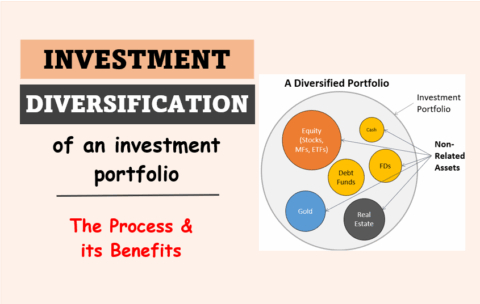
Diversification is one of the basic principles of the investment risk management. It’s not about putting a lot of money into one investment, it’s about diversifying your investments.
If there are problems with a company in which you have a large stake, it can make a big difference to a portfolio. A broader portfolio of investments can help to soften the blow of an underperforming investment. Diversification does not remove losses, but it can reduce the impact of some individual risks.
Diversification may also involve different industries, locations and types of assets. The right choice will depend on variables such as time horizon and risk tolerance.
Investment Options Such as Stocks, Bonds, etc.
Different investment products are for different purposes. Stocks are ownership in a company. Bonds are generally a loan to an issuer in exchange for interest and repayment of principal under agreed terms.
Funds and exchange traded funds can provide exposure to a larger universe of investments. Other alternatives include cash based products, property and alternative investments.
Each has its own characteristics, cost and risk. Therefore, it is important to understand how an investment works before you place your money.
Investment Growth May Be Affected by Time
Long-term investing lets investments grow more over a longer period of time. Another key concept is compound growth in which the returns an investment earns can themselves earn future returns.
The effect is more pronounced over longer time periods because growth can compound on previous growth. Regular contributions over time can also help grow the amount you’ve invested.
But long term investing comes with a risk. Markets can take sharp declines and the value of investments can swing widely.
It’s Not Just the Cost of Investing
There are more things to think about than investment returns. Fees and other costs can also affect how much money is kept over time.
You can also incur costs when you buy, sell, manage or hold an investment. Even relatively small recurring fees can make a meaningful difference over time because they eat into the money you would otherwise have staying invested.
So you need to know the full cost of an investment to be able to compare different options.
Hot Market Bypass Decision
A good market performance can excite people, while falling prices can make them fearful. Either of these can affect investment decisions.
It’s buying an asset and then taking the risk that you’re going to pay too much for it because the price just went up. And selling on a sudden drop can turn a temporary dip into a permanent loss.
Having a defined investment strategy can help to reduce emotional responses to short-term market movements. It’s better to review financial objectives and risk levels regularly than to react to every blip in market prices.

Research Is Still Important
Investment decisions must be made by understanding the asset, not by rumors or unfounded predictions.
Research may involve reviewing the company financials, understanding the investment product, reviewing fees, evaluating potential risks and deciding whether the investment fits the intended financial goal.
Unusually high returns with little or no risk should also be viewed with skepticism. Every legitimate investment involves some degree of risk and promises that sound too good to be true may be warning signs of potential fraud.
Patience Is Required for a Long-Term Approach
Investing is not a smooth ride upwards. Growth periods can be followed by market corrections, recessions or long periods of uncertainty.
When you invest, you have to take a long-term view because the market has short-term ups and downs. That doesn’t mean that you shouldn’t take serious changes in an investment or an economy seriously. That is, measuring those changes against the original financial objectives and overall strategy instead.”
Good investing habits are generally based on planning, diversification, risk awareness, research and patience. They are not guaranties of investment success but they can provide a more structured basis for making financial decisions over time.