


How should you start investing if you have never bought a stock, ETF or fund before? For many beginners, the first step can feel more complicated than it actually is. There are thousands of financial products, constantly changing market prices and endless opinions about where the economy is heading.
The good news is that starting to invest does not require you to become a professional trader.
For most beginners, successful investing is less about predicting which stock will rise tomorrow and more about building a sensible long-term strategy. Understanding your financial position, choosing appropriate investments, managing risk and staying disciplined can be far more important than finding the next market winner.
Why Should You Invest Instead of Keeping All Your Money in Cash?
Saving and investing serve different purposes.
Cash is useful for short-term expenses and emergencies because its value is relatively stable in nominal terms. Investments, however, provide the opportunity for your money to grow over longer periods.
The problem with keeping all your money in cash is inflation.
If prices increase over time while your savings earn little or no interest, your purchasing power can gradually decline.
Investing in assets such as shares, ETFs or other securities provides the potential for higher long-term returns, although those investments also involve risk.
There is no guaranteed return.
That distinction is important.
What Should You Do Before Investing?
The first step should not be opening a brokerage account.
Start with your personal finances.
Before investing, consider whether you have:
- Stable income
- Manageable debt
- Emergency savings
- A clear financial goal
- Money that you will not need immediately
An emergency fund can be particularly important.
If an unexpected expense occurs and all your available money is invested in shares, you may be forced to sell investments during a market decline.
That can turn a temporary decline into a permanent loss.
Investing money you can leave untouched for a longer period can give your strategy greater flexibility.
How Much Money Do You Need to Start?
You do not necessarily need thousands of euros.
Many modern investment platforms allow customers to invest relatively small amounts.
A beginner might start with a regular investment plan, often called a Sparplan, rather than making one large investment.
For example, investing €100 each month can gradually build an investment portfolio.
The amount itself is less important than establishing a sustainable habit.
However, you should never invest money simply because you feel that you “must” start immediately.
Your contribution should fit comfortably within your household budget.
What Is an ETF?
An ETF, or exchange-traded fund, is an investment fund traded on an exchange.
Many ETFs track an index.
Instead of buying shares in one company, an investor can purchase an ETF that holds a broad collection of securities.
For example, a global equity ETF may provide exposure to companies across multiple countries and industries.
This can make diversification easier for beginners.
Instead of researching dozens of individual companies, an investor can gain broad market exposure through one investment product.
However, ETFs are not automatically safe.
Their value can fall significantly during market downturns, depending on what the ETF invests in.
Why Is Diversification Important?
Imagine investing your entire portfolio in one company.
If that company experiences serious financial problems, your investment could lose a large portion of its value.
Now imagine spreading the investment across hundreds or thousands of companies.
A problem affecting one company would have a much smaller effect on the overall portfolio.
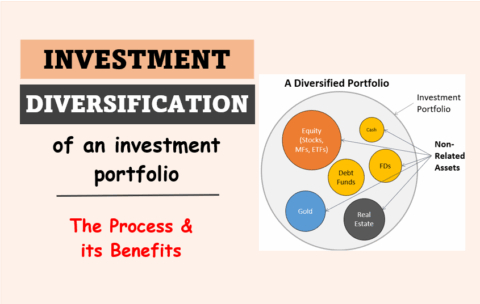
This is the basic idea behind diversification.
Diversification can involve:
- Different companies
- Different industries
- Different countries
- Different asset classes
It cannot eliminate investment risk, but it can reduce the impact of individual investment failures.
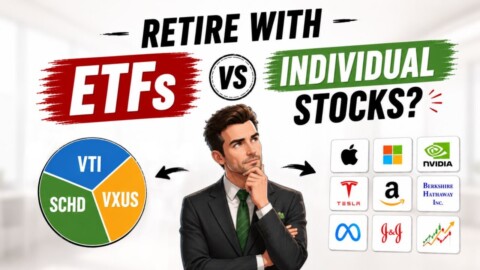
Should Beginners Buy Individual Stocks?
They can, but individual shares require more research.
When buying a single company, you are exposed to the financial performance of that specific business.
Before purchasing shares, consider:
- Revenue growth
- Profitability
- Debt
- Cash flow
- Competitive position
- Industry outlook
- Management
- Valuation
A well-known company is not necessarily a good investment at every price.
A great business can still be overpriced.
This is one reason broad ETFs can be attractive to beginners who do not want to spend significant time researching individual companies.
What Is a Sparplan?
A Sparplan allows investors to invest a fixed amount at regular intervals.
For example, you could invest €200 every month.
The investment is automatically purchased according to the selected schedule.
This approach can provide several advantages.
First, it creates discipline.
Second, it reduces the temptation to wait for the “perfect” time to invest.
Third, it means you buy investments at different market prices over time.
When prices are high, your fixed contribution buys fewer units.
When prices are lower, it buys more.
This is often associated with cost averaging, although investors should not assume that regular investing guarantees better returns.
How Important Is Your Investment Horizon?
Your investment horizon is the length of time you expect to keep your money invested.
This is one of the most important factors in choosing an investment strategy.
Someone saving for a goal two years away should generally approach risk differently from someone investing for retirement several decades in the future.
Shares can experience significant short-term volatility.
Over longer periods, investors have more opportunity to recover from temporary market declines, although there is still no guarantee of positive returns.
Before investing, ask:
When will I need this money?
Your answer should influence how much risk you are willing to accept.
Why Should Beginners Avoid Trying to Time the Market?
One of the most common mistakes is waiting for the “perfect” entry point.
Investors may think:
“I’ll buy when the market falls.”
Then the market rises.
They wait again.
When prices finally decline, fear may prevent them from buying.
This cycle can continue indefinitely.
Nobody can reliably predict the exact top or bottom of a market.
A disciplined investment strategy can therefore be more practical than attempting to predict every short-term movement.
What About Investment Fees?
Fees can have a meaningful effect on long-term returns.
Potential costs include:
- Brokerage fees
- ETF expense ratios
- Trading costs
- Account fees
- Currency-conversion charges
- Fund-related expenses
A fee of 1% may not sound significant in isolation.
But when applied to a growing portfolio over many years, the cumulative effect can become substantial.
This is why beginners should compare investment platforms and products carefully.
However, the cheapest option is not necessarily the best if the platform lacks important features or has poor service.
How Should You Choose a Broker?
When choosing a Depot or investment platform, compare several factors.
Investment Selection
Check which ETFs, shares and funds are available.
Sparplan Options
If you plan to invest regularly, see which savings plans are supported.
Costs
Look at trading fees, account charges and fund expenses.
Security
Check how the provider is regulated and how customer assets are held.
User Experience
A simple platform can make investing easier for beginners.
Tax Features
Consider whether the platform provides useful documentation for tax reporting and handles relevant tax processes appropriately.
German investors should also understand concepts such as the Sparer-Pauschbetrag and taxation of investment income before making investment decisions.
What Is the Biggest Beginner Mistake?
Trying to get rich quickly.
Investing is often presented online as a way to generate extraordinary returns in a short period.
That expectation can encourage excessive risk.
Beginners may buy highly speculative stocks, trade frequently or invest heavily in assets they do not understand.
Some may even borrow money to invest.
This can magnify losses.
A more sustainable approach is to focus on gradual wealth building.
Small, consistent investments can become meaningful over long periods because returns can compound.
How Does Compound Growth Work?
Compounding occurs when investment returns remain invested and generate potential future returns themselves.
Suppose you invest €10,000 and earn a hypothetical 5% return.
After one year, you would have approximately €10,500 before costs and taxes.
If the following year’s return is also 5%, the return is calculated on the larger amount.
Over several decades, this effect can become significant.
However, actual investment returns are not fixed, and markets fluctuate.
Compounding is a long-term principle, not a promise of a particular annual return.
Should You Invest During a Market Crash?
Market declines can be emotionally difficult.
However, a falling market does not automatically mean that investing should stop.
For long-term investors using diversified strategies, market downturns can be part of the normal investment journey.
The more important issue is whether your financial circumstances and investment plan have changed.
If your income is stable, your emergency fund is adequate and your investment horizon remains long, a temporary market decline may not change your long-term objective.
Final Thoughts
Starting to invest does not require perfect knowledge of financial markets.
The most important first steps are understanding your financial situation, establishing an appropriate emergency reserve, defining your investment goals and choosing products that match your risk tolerance and time horizon.
For many beginners, diversified ETFs and regular Sparplan contributions can provide a relatively simple way to participate in financial markets without selecting individual companies.
The key is discipline.
Avoid investing money you need immediately, do not rely on market predictions, compare fees carefully and understand what you are buying before committing your money.
Investing should be viewed as a long-term process rather than a race for quick profits. By avoiding common beginner mistakes and maintaining a consistent strategy, you can give your money an opportunity to grow while keeping your financial decisions grounded in realistic expectations.