



A mortgage is likely to be one of the biggest financial commitments you will ever make. For many people the monthly mortgage payment becomes a permanent fixture in the household budget for many years, so even small changes in the way the mortgage is handled can make a difference over time.
And it’s not just about getting the money to buy a property in a mortgage. The overall cost depends on the interest rate, repayment structure, other costs and financial flexibility.
Some practical decisions taken early on can assist you in managing the mortgage and avoiding unnecessary financial stress in the long run.
Begin With a Realistic Budget
Before committing to a mortgage, the monthly payment must fit comfortably into the household budget.
It is easy to look at the maximum amount a lender will offer. This doesn’t mean that the amount is comfortable to repay.
Mortgage payments are just one piece of the pie in terms of housing costs.
The monthly cost of home ownership includes property taxes, insurance, maintenance, utilities and unexpected repairs.
A realistic budget should allow for these expenses and for normal household expenditure.
Know the Rate of Interest.
The interest rate will greatly affect how much your mortgage ultimately costs.
A small difference in the rate can be significant when applied to a large loan over many years.
Fixed-rate mortgages offer more certainty, because the rate of interest you pay is locked in for a period of time. Variable-rate mortgages are affected by changes in market conditions.
Neither option is intrinsically superior in all situations. The best one will depend on the financial situation, the term of the mortgage and how much uncertainty of the payment can be tolerated.
Don’t Just Look at the Monthly Payment
A lower monthly payment may sound good at first glance, but that doesn’t always mean a cheaper mortgage.
A much better idea is the total amount paid over the entire term of the mortgage.
A mortgage with lower monthly repayments may take longer to pay off and therefore cost more interest overall.
When considering different mortgage options, it is worth looking at the interest rate, total amount you will pay back, fees and how long the mortgage is for, rather than just looking at one figure.
Maintain Some Financial Flexibility
A mortgage is not meant to consume the full euro of household income.
Home ownership always has unexpected costs. A broken heating system, an urgent repair or a temporary change in income can quickly become stressful when there’s no financial cushion.
In those situations, having an emergency fund in addition to making your regular mortgage payments can provide some protection.
The amount of savings required will differ from household to household but having savings available can make unexpected costs much easier to manage.
Think about Additional Repayments
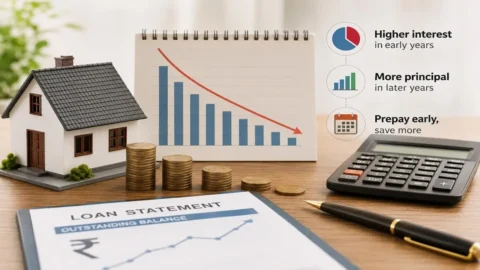
Extra repayments can reduce the amount outstanding more quickly if your mortgage terms allow you to.
Also paying down the principal earlier can mean less interest over the remaining life of the mortgage.
Even an occasional extra payment can help, especially if you do them on a regular basis for a number of years.
Check your mortgage agreement for any limits, conditions or charges before you make any extra repayments.
Don’t Stretch the Mortgage Too Thin
With mortgage rates and borrowing options making the monthly payment seem feasible, a bigger property can seem attractive.
But, a bigger mortgage also means more exposure to interest costs and other expenses of property.
A comfortable home within the budget can give you more financial stability than a property that leaves very little room for other priorities.
Sometimes the most expensive house you can technically afford is not the best financial choice.
Watch Out for the Repayment Period
The mortgage term has direct impact on the monthly payments and total interest. The longer the repayment period the lower the monthly amount, but usually more interest will be paid.
A shorter term can increase monthly repayments and lower the time interest accumulates.
The right mix will depend on income, savings, other financial commitments and long-term plans.
Review the Mortgage Before Fixed Period Ends
If you have a mortgage with a fixed-rate period, the end of that period should not surprise you.
It’s worth looking at the mortgage well before the fixed period ends and seeing what happens then.
By then market interest rates may be different and refinancing or renegotiating may be possible depending on the mortgage arrangement.
Your options are reduced if you leave your decision to the last minute.
Don’t Assume Too Much Other Debt
A mortgage is already a large financial commitment.
Monthly finances can be a lot harder to manage if you rack up lots of credit card debt, personal loans or other borrowing.
Keeping other debts manageable gives you more flexibility to deal with changes to your mortgage costs or unforeseen expenses.
It also makes it easier to put spare income to good use by saving or making extra mortgage repayments where suitable.
Property Price Monitoring
It costs something to own property, continually, beyond the mortgage.
Maintenance is not always predictable. Roof repairs, plumbing issues, heating problems and appliance replacements can all cost a lot of money.
By saving money now for future maintenance these costs can be avoided from becoming a financial emergency.
Regular maintenance can stop small problems from turning into much costlier repairs later.
Do not ignore changes in financial circumstances
A mortgage that works well today may not work as well down the road.
Income can vary, household expenses can rise and financial priorities can shift.
A mortgage review can be helpful after major changes such as a new job or significant change in household income or a change in long term financial plans.
Failing to take account of those changes can make it harder to modify the mortgage strategy when there is still scope for modification.
Make Decisions Based on the Entire Picture
You can’t judge a mortgage solely by its monthly payment.
Interest rates, repayment periods, fees, savings, household expenses and future plans all contribute to the decision.
A mortgage that looks good on paper may not be the right one once you factor in all the costs.
Taking the time to compare the full picture can lead to a much more manageable long-term arrangement.
Manage the Mortgage
Paying off mortgage as fast as possible is not the best way to manage mortgage.
It means setting up a repayment plan that is affordable to the household budget but still leaves room for savings, unexpected expenses and other financial objectives.
Over the years, a realistic budget, an appropriate interest rate, regular reviews and sensible borrowing can be a huge help.
It’s not simply about having a property. This is to ensure that the home will remain financially feasible over the entire mortgage term.