


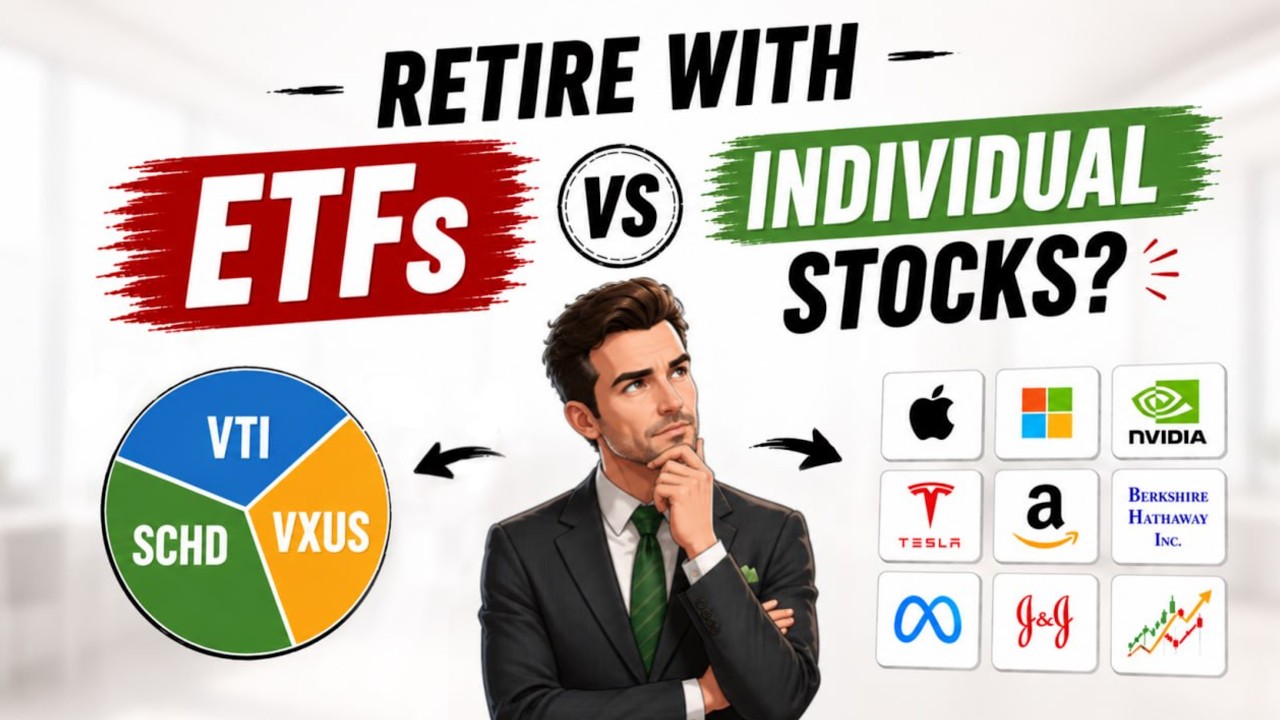
When is an ETF a better choice than buying individual shares? This is one of the most common questions for people who are beginning to build an investment portfolio.
Both approaches can provide exposure to financial markets, but they involve very different levels of concentration, research and risk. Buying individual stocks means selecting specific companies and accepting the consequences of their individual performance. An ETF can spread your investment across many securities through a single product.
Neither approach is automatically better.
The right choice depends on your investment goals, knowledge, time available for research and ability to tolerate losses.
What Is the Fundamental Difference?
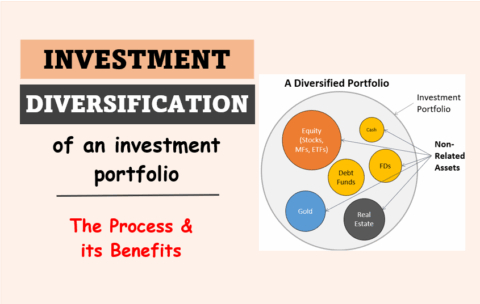
The simplest distinction is diversification.
When you buy an individual share, your investment is directly linked to one company.
If you buy shares in ten different companies, you have ten individual exposures.
An ETF can contain dozens, hundreds or even thousands of securities depending on its investment strategy.
This means a single purchase can provide broad market exposure.
For example, a broadly diversified equity ETF may include companies from several countries and industries.
If one company performs poorly, the impact on the entire ETF can be relatively limited.
That is one of the main reasons ETFs are attractive to long-term investors.
Why Do Individual Stocks Attract Investors?
Individual shares offer something an ETF cannot provide to the same extent: direct selection.
You can choose companies based on your own research and investment thesis.
Perhaps you believe a particular business has:
- Strong revenue growth
- A powerful brand
- Innovative technology
- Competitive advantages
- Excellent management
- Attractive valuation
If your analysis is correct and the company performs exceptionally well, owning the individual stock can potentially generate stronger returns than a broad market investment.
But the opposite is also true.
If your analysis is wrong, the losses can be significant.
How Much Research Do Individual Stocks Require?
Successful individual-stock investing can require substantial research.
You may need to understand:
- Annual reports
- Quarterly results
- Revenue growth
- Profit margins
- Debt
- Cash flow
- Valuation
- Industry competition
- Management decisions
- Future growth expectations
You also need to monitor whether the original investment thesis remains valid.
This can take considerable time.
An investor who does not enjoy analyzing companies may find this approach difficult to maintain over many years.
Why Can ETFs Be Simpler?
A diversified ETF reduces the need to select individual winners.
Instead of asking:
Which company will outperform?
you can focus on:
Which market exposure do I want?
For example, you might choose exposure to:
- Global equities
- European shares
- Emerging markets
- Government bonds
- Corporate bonds
- Specific industries
The ETF handles the underlying portfolio according to its stated investment strategy.
This can make portfolio management easier for people who prefer a more systematic approach.
Can an ETF Reduce Investment Risk?
It can reduce company-specific risk, but it cannot eliminate investment risk.
Suppose you own one company’s shares and that company suffers a major accounting scandal.
Your investment could fall dramatically.
If the same company represents only a small percentage of a diversified ETF, its individual problems may have a much smaller effect on your overall investment.
However, if the entire stock market falls, the ETF can also decline significantly.
This distinction is important:
Diversification reduces concentration risk, not market risk.
When Does an ETF Make More Sense?
An ETF may be particularly suitable when you:
- Want broad diversification
- Prefer a simple investment strategy
- Have limited time for research
- Are investing for the long term
- Want to make regular contributions
- Do not want to monitor individual companies constantly
For a beginner, this simplicity can be valuable.
A broad ETF can provide exposure to many businesses without requiring the investor to analyze each company individually.
When Might Individual Stocks Make More Sense?
Individual shares may be appropriate for investors who enjoy researching businesses and understand the additional risk.
You may prefer individual stocks if:
- You have strong knowledge of a particular industry
- You enjoy fundamental analysis
- You are comfortable with greater volatility
- You want more control over specific holdings
- You have a clear investment thesis
However, confidence should not be confused with competence.
Knowing a company’s products does not necessarily mean you understand its valuation or financial risks.
What About a Combination of Both?
You do not necessarily have to choose one approach exclusively.
Some investors build a diversified ETF portfolio as their core investment and use individual shares as a smaller component.
For example, someone might use a broad ETF for the majority of their equity exposure and allocate a smaller amount to companies they have researched personally.
This approach can combine:
Diversification from ETFs
with
Active selection through individual stocks
The exact allocation depends on personal circumstances and risk tolerance.
Why Does Your Time Horizon Matter?
Your investment horizon should influence how much risk you can reasonably accept.
Someone investing for retirement several decades away may have more capacity to tolerate market volatility than someone saving for a property purchase within two years.
Both ETFs and individual shares can experience significant price fluctuations.
However, individual stocks can be substantially more volatile because their performance depends on one business.
The longer your investment horizon, the more time you may have to recover from temporary declines—but this does not eliminate the possibility of permanent losses.
How Important Are Investment Costs?
Costs matter for both ETFs and individual stocks.
For ETFs, consider:
- Total Expense Ratio
- Trading costs
- Bid-ask spreads
- Tracking difference
For individual shares, consider:
- Brokerage fees
- Spreads
- Currency-conversion costs
- Trading frequency
Frequent trading can create unnecessary costs.
This is particularly relevant for investors who react to short-term market movements.
A low-cost, long-term strategy can be easier to maintain than constant buying and selling.
What Is an ETF-Sparplan?
A ETF-Sparplan allows you to invest a fixed amount regularly.
For example, you might invest €200 every month into a selected ETF.
This approach is particularly convenient for investors who receive a regular salary and want to automate their investments.
Instead of deciding every month which shares to buy, the contribution can be invested according to a predetermined plan.
Individual shares can also sometimes be included in savings plans, depending on the broker.
However, ETFs generally make broad diversification easier when investing smaller amounts regularly.
Why Can Individual Stocks Be Emotionally Difficult?
Imagine buying a company at €100 per share.
A few months later, it falls to €70.
You now face several questions:
Should you sell?
Should you buy more?
Has the business changed?
Is the decline temporary?
Would you make the same investment decision today?
These questions can create emotional pressure.
An investor who owns a broad ETF may still experience a decline, but the portfolio is not dependent on one company’s performance.
This can make it psychologically easier for some people to remain invested during difficult market periods.
What About Dividends?
Both individual stocks and ETFs can provide exposure to dividend-paying companies.
With an individual stock, you receive dividends directly from the company if the company declares and pays one.
With an ETF, dividends from underlying holdings may either be distributed to investors or reinvested within the fund, depending on whether the ETF is distributing or accumulating.
For investors focused on long-term wealth building, the reinvestment of income can contribute to compound growth.
However, dividend yield should not be the only factor considered when selecting an investment.
Can ETFs Become Too Concentrated?
Yes.
Not every ETF provides broad diversification.
Some ETFs focus on:
- One industry
- One country
- A small group of companies
- One investment theme
- A specific technology
- A particular factor
An investor might own several ETFs and believe they are diversified while actually holding many of the same companies.
For example, a broad technology ETF and a global equity ETF may both have substantial exposure to large technology companies.
Always examine the actual holdings.
How Should Beginners Decide?
Start with your own circumstances rather than the latest investment trend.
Ask yourself:
How much time can I dedicate to research?
Do I understand company financial statements?
Can I tolerate large declines in one stock?
Do I want a simple or active strategy?
How long will the money remain invested?
Do I need regular income or long-term growth?
Your answers can help determine whether ETFs, individual stocks or a combination is more appropriate.
What Is the Biggest Mistake to Avoid?
Do not choose individual stocks simply because they appear more exciting.
A portfolio full of high-profile companies can still be poorly diversified.
Likewise, do not buy an ETF simply because it has recently delivered excellent returns.
Past performance does not guarantee future results.
The most important factor is whether the investment matches your objectives and risk tolerance.
Final Thoughts
Choosing between ETFs and individual stocks is ultimately a question of strategy.
ETFs can provide broad diversification and a relatively simple way to access financial markets. They can be particularly useful for long-term investors who prefer regular contributions and do not want to research individual companies continuously.
Individual stocks provide greater control and the possibility of benefiting from successful company selection, but they also introduce greater company-specific risk and require more research.
For many investors, there is no need to make the decision entirely one way or the other. A diversified ETF can form the foundation of a portfolio, while individual shares can be used selectively by investors who understand the additional risks.
The best choice is the one you can understand, afford and maintain through different market conditions.
A successful investment strategy is not necessarily the one that looks most exciting. It is the one that gives you a realistic chance of reaching your financial goals while allowing you to remain disciplined when markets become unpredictable.