


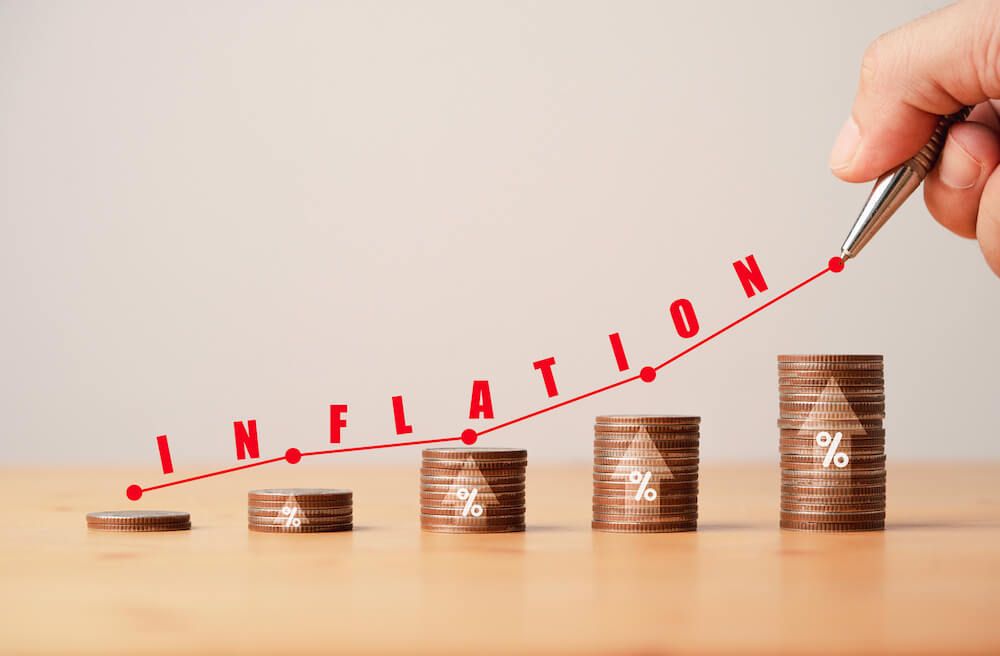
What happens to your money when prices keep rising? A salary may remain the same while groceries, rent, energy, insurance and other household expenses become more expensive. At the same time, money sitting in a bank account may gradually lose purchasing power if its interest rate remains below inflation.
This is why Inflation is one of the most important subjects in financial news.
Inflation is not simply a statistic published every month. It affects how much households can buy, how businesses set prices, how central banks make decisions and how investors evaluate different assets.
Understanding inflation can therefore help you make better decisions about saving, borrowing, spending and investing.
Why Does Inflation Matter So Much?
Inflation describes a sustained increase in the general level of prices for goods and services.
When inflation rises, the purchasing power of money falls.
For example, imagine that you could purchase a particular basket of household goods for €100 several years ago. If the same basket later costs €110, your €100 no longer buys as much as it previously did.
This doesn’t necessarily mean that every individual product becomes 10% more expensive. Inflation is calculated using a broad basket of goods and services.
The composition of that basket includes different categories of household spending.
This is why individual experiences of inflation can differ from official inflation statistics.
How Is Inflation Measured?
Inflation is generally measured using a price index.
For consumers in the euro area, one important measure is the Harmonised Index of Consumer Prices, commonly known as HICP.
Statistical agencies track changes in the prices of a representative basket of goods and services.
Categories can include:
- Food
- Energy
- Housing-related expenses
- Transport
- Clothing
- Restaurants
- Recreation
- Communication
- Other consumer goods and services
The weighting of each category matters because households spend different proportions of their income on different things.
A family spending a large amount on energy and food may feel the impact of rising prices differently from a household with relatively low energy consumption.
Why Can Inflation Feel Higher Than the Official Number?
Personal spending patterns are one reason.
Suppose the official inflation rate is 2.5%.
If your household spends a large portion of its monthly budget on products whose prices have increased faster than average, your personal experience may feel considerably worse.
For example, if food, rent and energy account for a significant share of your spending, increases in these categories can have a noticeable effect on your budget.
Meanwhile, other goods may have experienced smaller price increases or even price declines.
Inflation is therefore a broad economic measure rather than a precise calculation of every household’s personal cost of living.
How Does Inflation Affect Savings?
Inflation creates a problem for cash savers because money has purchasing power that changes over time.
Imagine you have €20,000 in a bank account earning 1% interest while inflation is 3%.
Your balance may increase in nominal terms, but your purchasing power can still decline.
The simplified real return would be approximately:
1% interest − 3% inflation = −2%
The actual calculation can be more complicated, particularly when taxes and changing inflation rates are considered.
Nevertheless, the basic principle is important:
A positive interest rate does not automatically mean your savings are gaining purchasing power.
Why Should You Compare Savings Rates?
When inflation is high, the interest rate on your savings account becomes particularly important.
Two accounts may both be described as savings products, but their returns can differ considerably.
Common savings products include:
- Tagesgeld
- Festgeld
- Savings accounts
- Money-market products
A higher interest rate can help reduce the erosion of purchasing power, although it cannot guarantee that your money will always beat inflation.
When comparing accounts, also examine:
- Interest rate
- Duration
- Conditions
- Deposit limits
- Withdrawal restrictions
- Tax implications
- Deposit protection
The highest advertised rate may not necessarily be the best option if it comes with restrictions that do not suit your financial needs.
What Happens to Investments During Inflation?
Inflation can affect different investments in very different ways.
There is no single asset that automatically performs well whenever inflation rises.
Stocks, bonds, property, commodities and cash can all respond differently depending on the economic environment.
Stocks
Companies may be able to increase prices when their costs rise, potentially protecting revenue and profits.
However, higher inflation can also increase wages, energy costs and financing expenses.
If companies cannot pass these costs to customers, profitability may suffer.
Bonds
Inflation can be particularly important for fixed-income investments.
If you own a bond paying a fixed interest rate while inflation rises significantly, the real value of those payments declines.
Higher market interest rates can also cause the market value of existing bonds to fall.
Real Estate
Property is sometimes viewed as a potential hedge against inflation because property values and rents may rise over time.
However, property is not guaranteed to outperform inflation.
Higher interest rates can increase mortgage costs and reduce demand, which can affect property markets.
Gold and Commodities
Some investors consider commodities such as gold as a way to diversify against inflation.
However, prices can be volatile and there is no guarantee that gold will rise whenever consumer prices increase.
How Does Inflation Influence Interest Rates?
This is where inflation becomes especially important for financial markets.
When inflation remains too high, the European Central Bank may maintain tighter monetary conditions to reduce inflationary pressure.
Higher interest rates can make borrowing more expensive.
This can affect:
- Mortgages
- Consumer loans
- Business financing
- Investment decisions
- Savings products
- Bond markets
Because of this connection, investors closely follow inflation data before ECB meetings.
A higher-than-expected inflation figure can change expectations about future monetary policy and potentially affect financial markets.
Why Do Investors Care About Inflation Expectations?
Financial markets are forward-looking.
Investors don’t only care about today’s inflation rate. They also care about where inflation may go next.
Suppose inflation is currently falling.
That could be positive.
But if investors believe inflation will remain high for several years, they may continue to expect restrictive monetary policy.
Conversely, if inflation falls faster than expected and appears likely to remain controlled, investors may begin anticipating lower interest rates.
This can influence stock and bond prices.
Can Inflation Affect Your Mortgage?
Yes.
The relationship is particularly important for people considering new financing or refinancing.
If inflation contributes to higher interest rates, mortgage financing may become more expensive.
Existing borrowers with long fixed-rate periods may be protected from immediate changes to their monthly payments.
Borrowers with variable-rate structures may experience changes more directly.
For prospective homeowners, inflation therefore matters even if they are not actively investing in financial markets.
How Does Inflation Affect Everyday Spending?
The most visible effect is a change in household purchasing power.
If your income increases by 2% while your living costs rise by 4%, your nominal salary is higher but your real purchasing power may have declined.
This is why wage growth and inflation are often discussed together.
Consumers may respond by:
- Comparing prices more carefully
- Changing brands
- Reducing discretionary spending
- Looking for cheaper subscriptions
- Adjusting household budgets
- Increasing savings when possible
Businesses respond differently, often reviewing their pricing, wages and operating costs.
What Can You Do When Inflation Is High?
There is no universal inflation strategy, but several practical steps can help.
Review Your Budget
Identify where your money is actually going.
If certain expenses have increased significantly, determine whether there are realistic alternatives.
Compare Savings Accounts
If large amounts of cash are sitting in an account with a very low interest rate, compare alternatives that match your liquidity needs.
Avoid Unnecessary High-Cost Debt
Higher interest rates can make consumer debt particularly expensive.
Paying down expensive debt can sometimes provide a more predictable financial benefit than taking additional investment risk.
Think Long Term
If you are investing for a long-term objective, focus on diversification and your overall strategy rather than reacting to every inflation report.
Maintain an Emergency Fund
Inflation can make unexpected expenses more difficult to handle.
Maintaining accessible savings can provide financial flexibility even when prices are rising.
Should You Invest Just Because Inflation Is High?
Not necessarily.
Inflation is only one factor when making an investment decision.
An asset that performed well during a previous inflationary period may not behave the same way in the future.
Investment decisions should consider:
- Time horizon
- Risk tolerance
- Diversification
- Liquidity
- Taxes
- Financial goals
Avoid making large portfolio changes simply because a single inflation figure has been released.
Why Inflation News Can Move Financial Markets
When new inflation data differs significantly from expectations, financial markets can react quickly.
A stronger-than-expected inflation reading may lead investors to believe that interest rates could remain higher for longer.
A weaker-than-expected reading can produce the opposite expectation.
The reaction can affect:
- Aktien
- Anleihen
- Euro exchange rates
- Interest-rate markets
- Commodities
This is why inflation announcements often appear prominently in financial news.
Final Thoughts
Inflation affects far more than the price of groceries.
It influences the real value of savings, the cost of borrowing, investment returns, household purchasing power and monetary-policy decisions.
For consumers, one of the most important lessons is to distinguish between nominal money and real purchasing power. A bank balance can increase while its ability to buy goods and services declines.
For investors, inflation should be considered alongside interest rates, economic growth, company earnings and broader market conditions.
The goal is not to predict every future change in prices. Instead, understand how inflation affects your personal finances and make sure your savings, debt and investment strategy are appropriate for your long-term objectives.
When you understand inflation beyond the headline percentage, financial news becomes much easier to interpret—and everyday financial decisions become easier to put into perspective.