



Why does the stock market sometimes rise sharply after positive economic news, while on another occasion seemingly good news causes share prices to fall? This is one of the most confusing aspects of financial markets for new investors.
When economic data, central-bank decisions, company results or political developments are announced, investors immediately try to determine what the information means for future profits, interest rates and economic growth. The reaction in share prices is therefore rarely based simply on whether the news is “good” or “bad.”
For anyone following the DAX, European stocks or global financial markets, understanding this relationship can make financial news much easier to interpret.
What Actually Moves Stock Prices?
At its simplest level, a stock price reflects what investors are willing to pay for a company’s expected future earnings.
This means investors are constantly looking ahead.
If new information suggests that a company could generate higher profits in the future, demand for its shares may increase. If investors believe future earnings will be weaker, the share price may decline.
Economic news matters because it can influence the environment in which companies operate.
For example, changes in:
- Interest rates
- Inflation
- Consumer spending
- Economic growth
- Employment
- Energy prices
- Exchange rates
- Government policy
can all affect corporate earnings and investor expectations.
The important word is expectations.
Markets often react to what investors expected before the announcement rather than simply reacting to the announcement itself.
Why Can Good Economic News Push Stocks Lower?
This is where financial markets can appear completely illogical.
Imagine economists expect inflation to fall from 3% to 2.5%, but the actual figure comes in at 2.7%.
Inflation has still decreased.
At first glance, that sounds positive.
However, investors may have expected an even larger decline. They could therefore conclude that the European Central Bank may keep interest rates higher for longer than previously anticipated.
That could cause investors to reduce their exposure to equities.
The result?
Inflation falls, but stock prices decline.
The market is reacting to the difference between expectations and reality.
How Do Interest Rates Affect Share Prices?
Interest rates are among the most important factors influencing financial markets.
When borrowing costs are high, companies may face more expensive financing. Consumers may also reduce spending because loans and mortgages become more costly.
At the same time, higher interest rates can make savings products and bonds more attractive compared with certain stocks.
When interest rates decline, the opposite can happen.
Lower borrowing costs can encourage investment and consumer spending. Companies may find it cheaper to finance expansion, while investors may look toward equities for potentially higher returns.
This is one reason why EZB interest-rate decisions receive so much attention from investors.
Why Does the DAX React to International News?
The DAX represents major German companies, but the companies included in the index operate in international markets.
Large German businesses can generate significant revenue outside the domestic economy.
That means developments in:
- The United States
- China
- The euro area
- Global energy markets
- International trade
- Currency markets
can influence German shares.
For example, a major slowdown in Chinese industrial activity could affect companies exposed to Chinese demand. Similarly, a significant change in US interest rates can influence global investment flows.
As a result, following German financial news alone is not always enough to understand movements in German stocks.
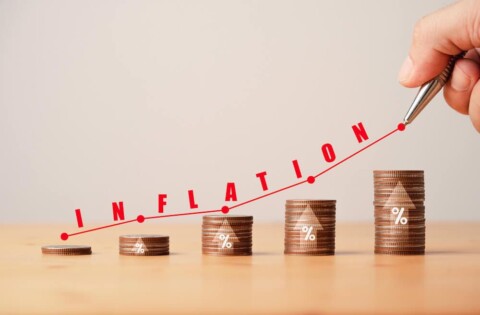
What Does Inflation Have to Do With Stock Prices?
Inflation affects both companies and consumers.
When production costs rise, businesses may face higher expenses for:
- Energy
- Raw materials
- Transportation
- Wages
- Financing
Companies can sometimes pass these costs to customers through higher prices. However, if customers reduce spending, businesses may struggle to maintain revenue growth.
Inflation also affects monetary policy.
If inflation remains persistently high, central banks may maintain restrictive interest rates for longer.
Investors therefore watch inflation data closely because it can influence both corporate profitability and future interest-rate expectations.
Why Do Stock Markets React Before the Economy Changes?
Financial markets are forward-looking.
Stock prices can move before economic conditions become visible in official statistics.
Suppose investors believe that economic growth will weaken over the next six months.
They may begin selling shares today, even though current economic data still looks relatively strong.
This explains why financial markets can sometimes appear to “predict” an economic slowdown.
However, markets do not always predict the future correctly.
They are based on expectations, and expectations can change quickly when new information becomes available.
What Happens When Economic Data Beats Expectations?
Financial news frequently uses phrases such as:
“Economic growth beats expectations.”
This means the actual result was stronger than economists or investors had anticipated.
For example, analysts might expect quarterly economic growth of 0.2%, while the actual figure is 0.5%.
That could initially be interpreted as positive.
But investors may then consider what the stronger growth means for inflation and interest rates.
If stronger growth increases concerns about inflation, the market reaction could become less positive.
This is why experienced investors look beyond the headline number.
Why Do Company Results Matter So Much?
Economic news is important, but individual company results can have an even more direct effect on specific shares.
When a company releases earnings, investors examine:
- Revenue
- Profit
- Earnings per share
- Cash flow
- Debt
- Future guidance
- Expected demand
- Cost developments
A company can report record profits and still see its share price fall.
Why?
Perhaps investors expected even better results.
If analysts expected €5 billion in revenue and the company reports €4.8 billion, the market may consider the result disappointing even though €4.8 billion represents strong business activity.
Again, expectations matter.
How Does Political News Influence Financial Markets?
Political developments can affect investor confidence, regulation, taxation, trade and government spending.
Elections, changes in government policy, international disputes and trade agreements can therefore influence markets.
However, the reaction is rarely predictable.
Investors may initially respond to a political announcement and then change their interpretation after considering its potential economic consequences.
For long-term investors, it is generally more useful to understand the potential financial impact of a political development than to react emotionally to every headline.
Why Can Markets Move So Quickly?
Modern financial markets operate continuously during trading hours, and information travels almost instantly.
Large institutional investors, professional traders and automated trading systems can respond to economic announcements within seconds.
This can produce sharp movements in major indices.
A single inflation figure or central-bank statement can therefore affect:
- Stock prices
- Bond yields
- Currency exchange rates
- Commodity prices
The reaction can become particularly strong when the announcement is significantly different from expectations.
Should Individual Investors React to Every Financial News Headline?
Usually, no.
Following financial news is useful, but reacting to every market movement can lead to poor investment decisions.
A long-term investor may have a diversified portfolio designed to withstand short-term fluctuations.
Selling investments every time the market falls can turn temporary volatility into a permanent loss.
Instead, investors should ask:
Has the underlying investment thesis changed?
If a company’s long-term business prospects remain intact, a short-term market decline may not necessarily require action.
If the company’s financial position or long-term outlook has fundamentally changed, however, the situation deserves closer examination.
How Can You Read Financial News More Effectively?
Rather than focusing only on headlines, look for the information behind them.
When you see that the DAX has fallen, ask:
- What caused the movement?
- Was the event already expected?
- Did the actual data differ from forecasts?
- Are interest-rate expectations changing?
- Which sectors are most affected?
- Is the movement short-term or based on a fundamental change?
This approach can help separate meaningful developments from ordinary market noise.
Final Thoughts
Stock markets do not react simply to good or bad news. They react to how new information changes expectations about future profits, economic growth, inflation and interest rates.
That is why a positive economic report can sometimes send shares lower, while disappointing news can occasionally trigger a market rally.
For anyone following the DAX and broader financial markets, the most useful habit is to look beyond the headline. Understand what investors expected, what actually happened and how the new information could affect future corporate earnings and monetary policy.
Financial markets will always experience periods of volatility. The investors who understand the relationship between economic news and market expectations are better positioned to interpret those movements without automatically reacting to every headline.